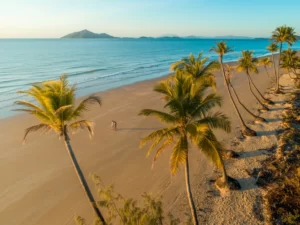
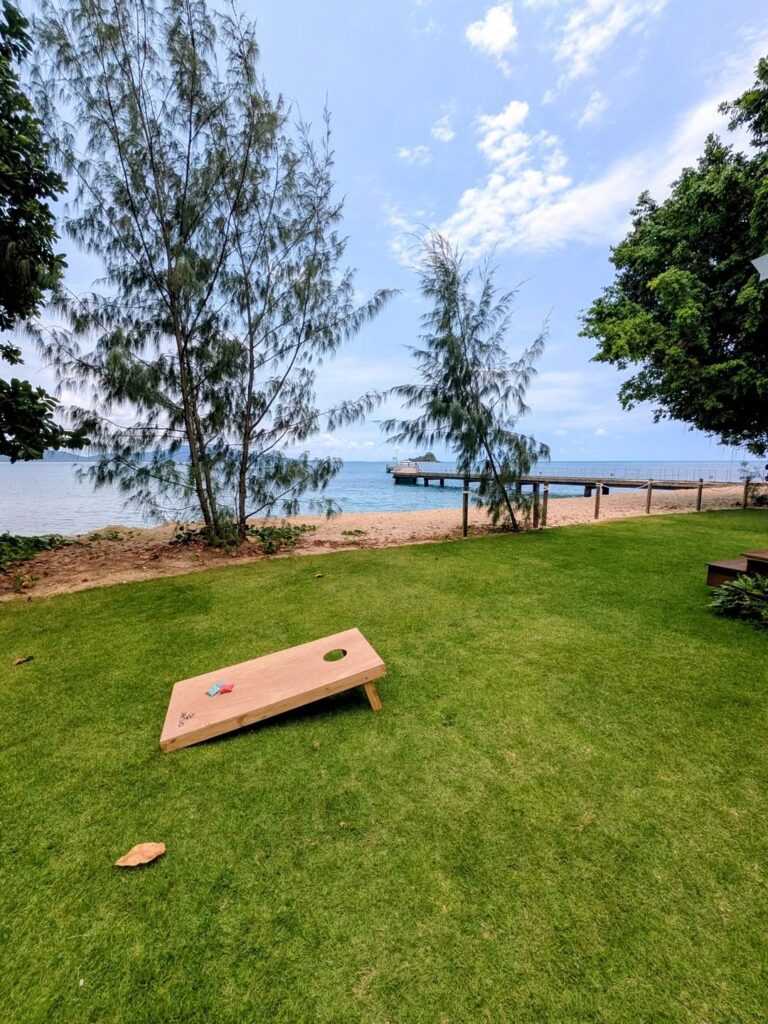
Just 10 minutes by boat from Mission Beach, Dunk Island is where rainforest-clad hills meet coral-fringed beaches, walking trails and beachfront camping – all inside the Great Barrier Reef World Heritage Area.
Most of the island sits within Family Islands National Park, making it one of the easiest places in Far North Queensland to experience a true tropical island national park straight from the mainland.
This guide brings together everything you need to plan a Dunk Island escape, from ferries and camping to walking tracks, swimming spots and nearby accommodation on the Cassowary Coast.
What makes Dunk Island special?
Dunk Island (known as Coonanglebah, often translated as “Island of Peace and Plenty”) sits around 4 km off Mission Beach in the Cassowary Coast Region.
It’s the largest island in the Family Islands group, with lush rainforest, eucalypt forest, mangroves and fringing reef teeming with marine life.
A few reasons travellers love Dunk Island:
- Easy access: It feels remote, but it’s only a short boat ride from Mission Beach – see ferry and day-trip options on Dunk Island Adventures.
- National park experience: Walking trails, birdlife and lookouts without needing a live-aboard or long transfers, highlighted by Dunk Island & Mission Beach activities guide.
- Beachfront camping on the spit: Nine national-park campsites right beside the sand at the Dunk Island camping area described by our Camping Guide.
- Laid-back vibe: No big resort crowds – just swimmers, hikers, paddlers and campers enjoying nature.
- Gateway to Cassowary Coast: Combine your island time with rainforest walks, waterfalls and coastal villages around Mission Beach and the wider Cassowary Coast. You’ll find regional inspiration on Tropical North Queensland’s Dunk Island listing and Queensland.com’s destination page.
Where is Dunk Island?
Dunk Island is part of the Family Islands in the Coral Sea, roughly midway between Cairns and Townsville. It lies just offshore from the town of Mission Beach in the Cassowary Coast Region, Queensland, Australia.
From the sand spit and Brammo Bay you’ll look back across the water to Mission Beach, with other nearby islands like Bedarra, Wheeler and Coombe scattered along the horizon.
Quick facts
- Location: Off Mission Beach, Cassowary Coast, Far North Queensland
- Distance from mainland: Around 4 km offshore (about a 10-minute boat trip in normal conditions)
- Status: Mostly Family Islands National Park and part of the Great Barrier Reef World Heritage Area.
- Highest point: Mount Kootaloo, 271 m above sea level
- Walking trails: Approx. 13 km of tracks across several routes, summarised by hiking guide.
- Camping: Nine boat-based sites at the Dunk Island camping area, including a group site near the jetty
- Main landing area: Brammo Bay jetty, a short walk from the spit and national-park campground
Traditional Owners & history
Dunk Island’s Traditional Owners are the Bandjin and Djiru peoples, who used the island for food, materials and cultural practices long before European arrival. The Traditional name Coonanglebah is recorded on Wikipedia’s Dunk Island history section and in Queensland Parks’ information on the Family Islands.
The island was named “Dunk Island” by Captain James Cook in 1770, after George Montagu Dunk, Earl of Halifax.
In 1897, writer and naturalist Edmund James Banfield settled on Dunk Island with his wife and wrote about island life and nature, helping to popularise the island as a tropical retreat – his story is detailed on the Dunk Island Wikipedia page.
A resort later became a well-known holiday destination until it was devastated by cyclones, especially Cyclone Yasi in 2011. Recent years have seen new ownership and a long-term revitalisation plan, with updates often featured in news coverage such as ABC News’ report on Annie Cannon-Brookes’ purchase of Dunk Island.
When is the best time to visit Dunk Island?
Dunk Island has a tropical climate with warm temperatures year-round. Long-term climate patterns are summarised by the Bureau of Meteorology and partners via pages like Elders’ Dunk Island climate history.
Broadly:
- Dry season (roughly May–October):
- Lower humidity and generally calmer seas
- Popular for hiking, camping and long days on the beach
- Wet season (roughly November–April):
- Hotter, more humid, with periods of heavy rain and potential tropical storms or cyclones
- Marine stingers (stinging jellyfish) are more common in warmer months – always follow local advice on stinger suits and safe swimming zones.
For current conditions and forecasts, check the Bureau of Meteorology Dunk Island forecast.
If you’re planning multi-day camping or big hikes like the Mt Kootaloo summit or the circuit walk, the drier, cooler months are usually more comfortable.
How to get to Dunk Island
From Mission Beach
Dunk Island is most commonly accessed from Mission Beach on the Cassowary Coast.
- Ferry and water taxi services
Passenger boats run between Mission Beach (typically departing from Clump Point or Wongaling Beach) and Dunk Island, with crossings of around 10 minutes noted by travellers on sites like Tripadvisor’s Family Islands National Park reviews. For current schedules and packages, check out the Dunk Island Ferry page. - Private boat or charter
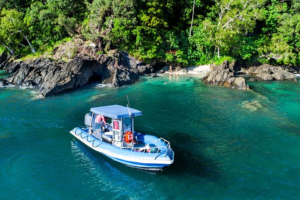
Boaties and private charters can anchor in Brammo Bay or around the spit, observing marine-park rules and designated moorings where provided. Further guidance on anchoring and visiting the wider island group is available from local operators.
From Cairns, Townsville & beyond
- From Cairns (approx. 2–2.5 hours’ drive):
Drive south along the Bruce Highway then follow the turnoff to Mission Beach. - From Townsville (approx. 3 hours’ drive):
Drive north on the Bruce Highway towards Tully and then to Mission Beach.
Some tours combine Dunk Island with the outer Great Barrier Reef or other islands; you’ll find a selection of these via Mission Beach and Cassowary Coast tourism guide.
Things to do on Dunk Island
1. Beaches & swimming spots
- Dunk Island Spit
A long sand spit extending into clear turquoise water, ideal for swimming and beach games, and just steps from the national-park camping area described by Queensland Parks’ Dunk Island camping area. - Brammo Bay
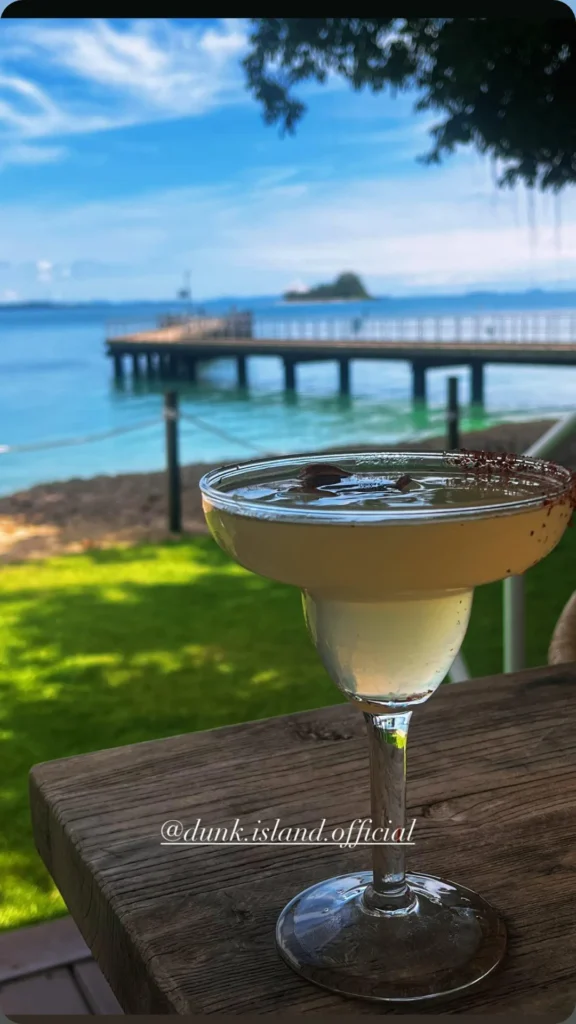
The main landing area with sandy beach, jetty and views back to Mission Beach and across the Family Islands group. It’s the classic “arrival” scene featured in many travel photos and articles like Queensland.com’s Ultimate Guide to Dunk Island. - Muggy Muggy Beach
A small, sheltered cove reached via an easy walk through rainforest and mangroves from the main beach. It’s a popular picnic and snorkel spot in calm conditions, also highlighted on Tropical North Queensland’s Dunk Island page.
Always check local conditions and observe any stinger or safety signage, particularly during warmer months.
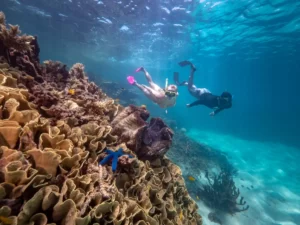
2. Snorkelling & reef life
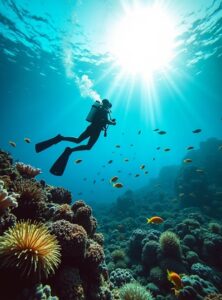
Fringing reefs surround Dunk Island, supporting coral, fish and seagrass beds that feed turtles and dugongs. Explore the 8 Top Great Barrier Reef Tours and Unforgettable Activities.
- Snorkel straight off the spit or Muggy Muggy Beach when visibility is good and seas are calm.
- Reef and island tours departing Mission Beach, often combine Dunk Island with snorkelling on the outer Great Barrier Reef.
Visibility can change quickly with wind, tide and recent rain, so it’s worth checking with local operators for up-to-date advice.
3. Hiking & walking trails on Dunk Island
Dunk Island offers around 13 km of walking tracks, summarised by Queensland Parks’ “things to do” page.
Muggy Muggy Beach Track
- Distance: Approx. 3 km return
- Time: ~40–60 minutes return
- Grade: Easy
- Highlights: Rainforest, coastal woodland and mangroves leading to a pretty, sheltered sandy cove perfect for swimming in suitable conditions.
Mount Kootaloo Summit
- Distance: Approx. 7 km return
- Time: ~2–3 hours return
- Grade: Moderate – steady uphill sections
- Highlights: Island and mainland views from lookouts near the 271 m summit, plus remnants of the World War II radar station.
Dunk Island Circuit Track
- Distance: Roughly 9–11 km circuit (depending on your starting point)
- Time: Around 3.5–4 hours
- Grade: Moderate to challenging
- Highlights: Combines rainforest, Palm Valley, sections of the Mt Kootaloo trail and several beaches including Coconut Beach. Travellers often report completing the circuit in around four hours with time for views and swims.
Walking tips:
- Start longer walks early to avoid the heat.
- Carry plenty of drinking water; there are limited taps away from the spit.
- Wear sturdy footwear and be cautious on uneven or slippery surfaces, especially after rain.
4. Kayaking, stand up paddle boarding & boating
The waters around Dunk Island are ideal for kayaking and stand up paddle boarding (SUP) in the right conditions:
- Paddle along the shoreline of Brammo Bay and the spit for island views and a chance to spot turtles or rays.
- Experienced paddlers can explore further along the coast or between nearby islands, following the safety guidance for the Great Barrier Reef Marine Park.
Brammo Bay is a popular anchorage, and information on boating and anchoring across the Family Islands group can be found via Queensland Parks – Family Islands National Park.
5. Wildlife & birdwatching
Dunk Island is known for over 100 bird species, including vulnerable seabirds nesting on smaller islands in the group.
- Spot parrots, kingfishers and shorebirds on coastal walks and beaches. Check out bird watching tours.
- Look for bright blue Ulysses butterflies along rainforest tracks, a common highlight mentioned in regional guides.
- The surrounding waters may host turtles and dugongs grazing on seagrass beds between the islands.
Nearby Mound Island (Purtaboi) is a key seabird nesting site, and seasonal closures (typically October–March) are noted in both Wikipedia’s Dunk Island entry and Queensland Parks information. Always obey island-closure signage to protect nesting seabirds.
Camping on Dunk Island
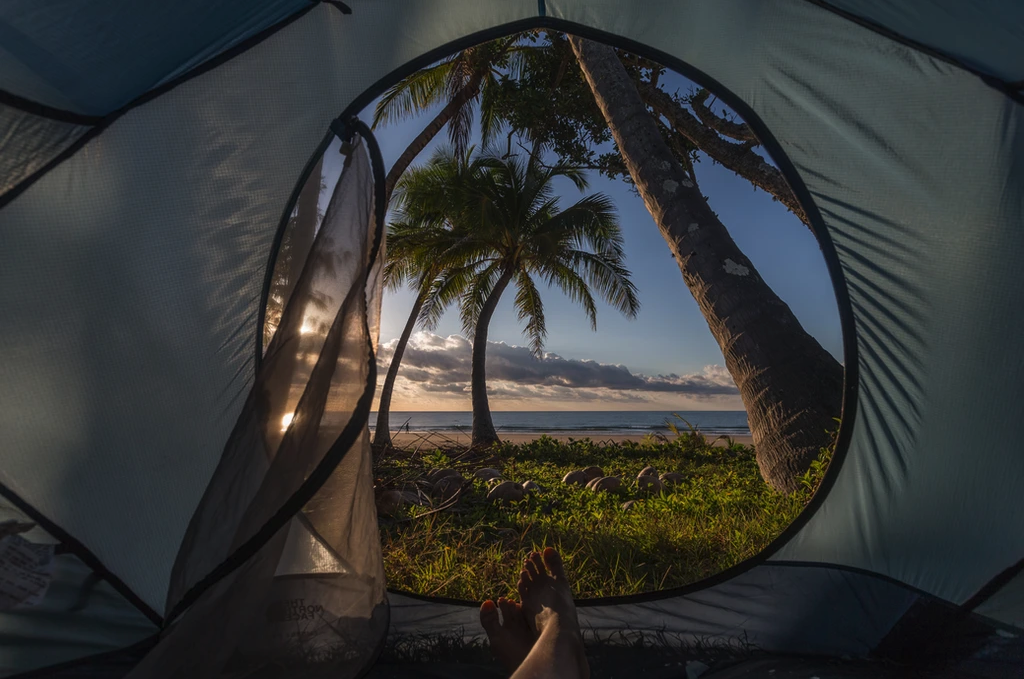
Campsites & facilities
The main camping area is the Dunk Island camping area on the spit, learn more here!
Key points:
- Number of sites: Nine boat-based campsites on or near the beach, including a group site
- Location: Beside the sand spit, a short walk from the jetty
- Access: By boat only – usually via ferries or water taxis from Mission Beach, or private boat.
- Facilities generally include:
- Toilets and showers
- Picnic tables
- Drinking water
- BBQs (check current facilities and fire restrictions)
Camping is managed by the local authority (Cassowary Coast Regional Council) rather than Queensland Parks, and bookings are made via a dedicated site DunkIslandCamp.com.au.
For a detailed step-by-step on choosing sites, costs and what to pack, see the Dunk Island Camping & Activities guide on Dunk Island Adventures.
What to bring for Dunk Island camping
- Tent and sleeping gear (sites are sand or compacted ground)
- Sufficient food and snacks – there are no general stores on the island (Tripadvisor reviews consistently advise bringing everything you need to eat and drink)
- Plenty of drinking water (even if taps are available)
- Sturdy footwear for walking tracks
- Sun protection and insect repellent
- Stinger suit or appropriate protection if swimming during warmer months
- Rubbish bags – there is no rubbish collection, so everything you bring in must go out.
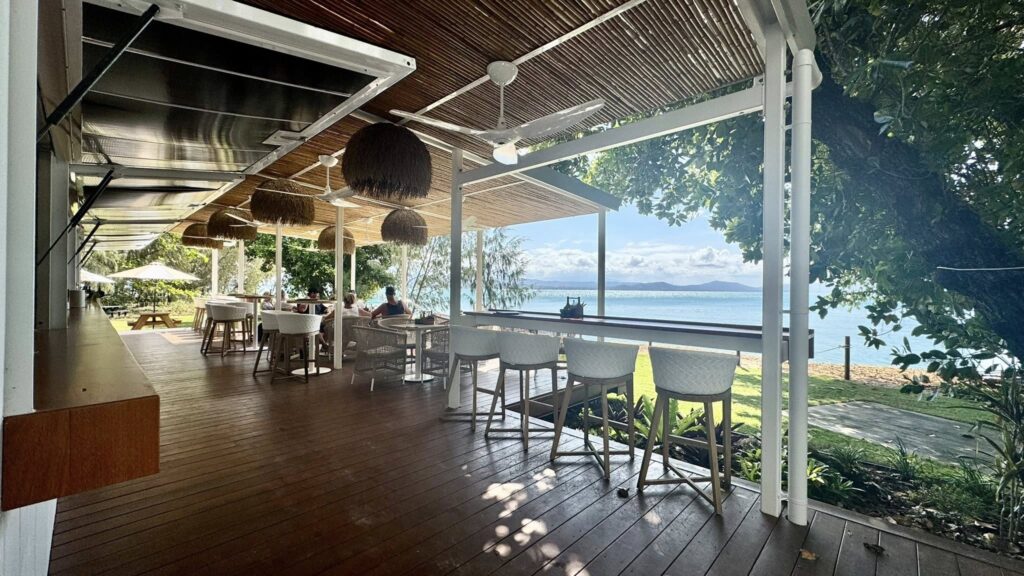
Food & drink: Dunk Island Spit Restaurant & Mission Beach
A new beachfront venue known as the Dunk Island Spit Restaurant has opened as part of the island’s revitalisation, check out more about the restaurant here.
For opening hours, menus and how to pair a meal with your island visit, refer to the dedicated Dunk Island Spit Restaurant guide on Dunk Island Adventures.
We still recommend bringing snacks and backup meals when camping, as opening hours can change and there are no supermarkets on the island.
Back on the mainland, Mission Beach offers plenty of cafés, pubs and eateries. You can explore local options via the Mission Beach restaurant listings on Dunk Island Adventures.
Where to stay near Dunk Island
Because the island resort remains closed following cyclone damage and ownership changes documented on Wikipedia and news outlets, most visitors either camp on the spit or stay on the mainland and visit Dunk Island on day trips.
Popular options:
- Mission Beach & Cassowary Coast
- Beachfront holiday parks and caravan parks
- Motels, apartments and holiday homes
- Boutique stays in Wongaling Beach, South Mission Beach and Bingil Bay
- Nearby islands
- Bedarra and other islands in the Family Islands group, as outlined on Family Islands National Park and regional guides, for higher-end, secluded stays.
You can highlight specific places on your accommodation page and link through from this section.
Safety & responsible travel tips
Because most of Dunk Island is national park and the surrounding waters form part of the Great Barrier Reef World Heritage Area, visitors share responsibility for looking after it:
- Respect national park rules: Stay on marked tracks, don’t enter the private resort lease area or airstrip, and respect closures or restricted zones. See Queensland Parks’ Family Islands National Park page for official guidelines.
- Take all rubbish home: There is no rubbish collection at the Dunk Island camping area; Queensland Parks and local operators emphasise a strict “leave no trace” approach.
- Do not feed wildlife: It harms animals and changes their natural behaviour.
- Be stinger-aware: In warmer months, follow local advice on stinger suits and safe swimming areas. Check the BOM forecast and local signage before swimming.
- Check weather and sea conditions: Strong wind and swell can affect ferry operations – tour providers and ferry sites such as Dunk Island Reef Adventures will confirm if services are running.
- Follow fire regulations: Observe any fire bans and use designated BBQs or fuel stoves as directed.